FeedX vs. Later: Visual Social Planning or Catalog-First Content?
Compare FeedX vs. Later for visual planning, Link in Bio, catalog context, content approval, scheduling, and product-led ecommerce campaigns.
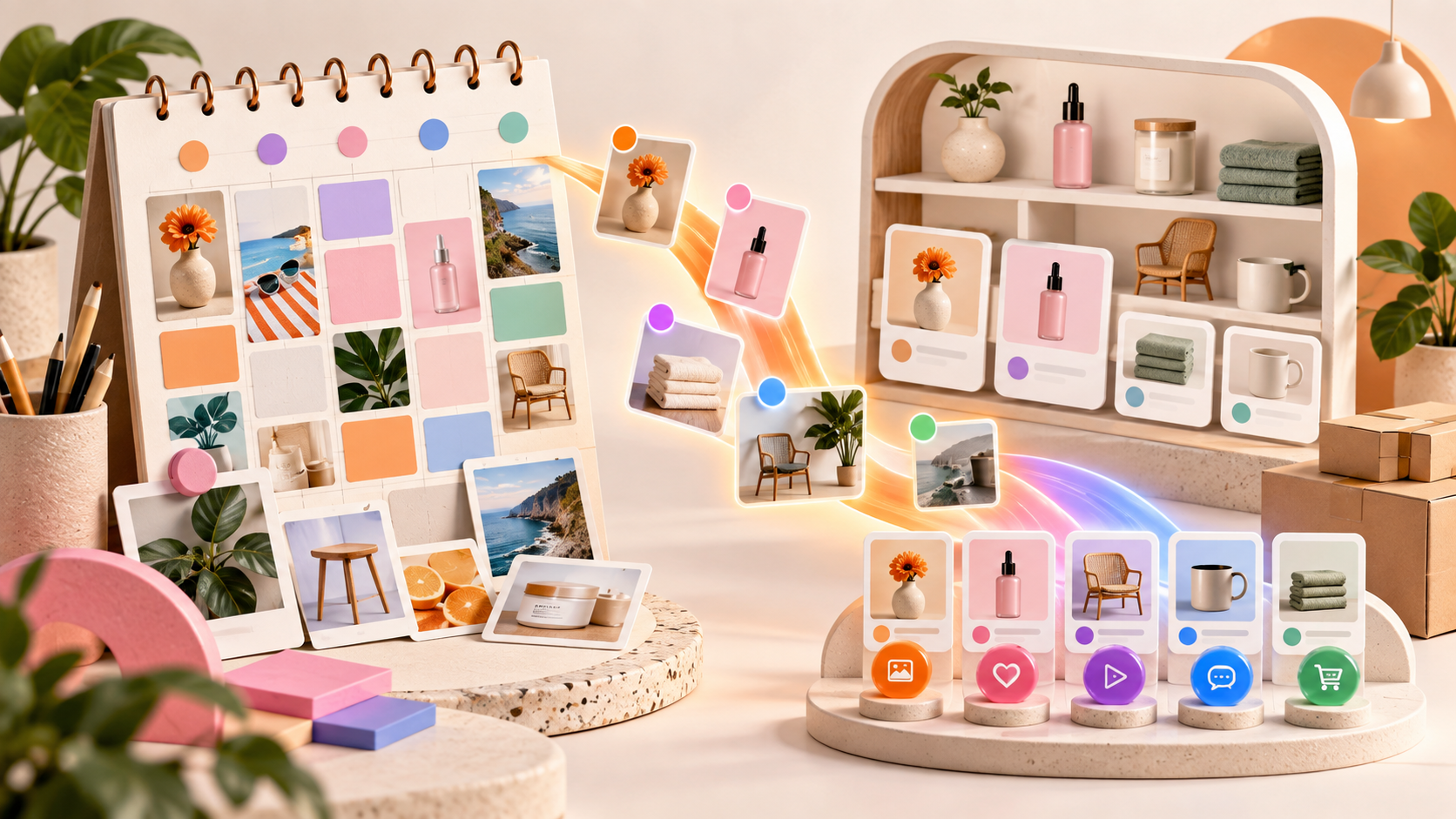
A skincare brand that needs to plan Reels, maintain a polished Instagram grid, and send visitors through a Link in Bio page may find Later immediately intuitive. A store with hundreds of SKUs, weekly offer changes, and product claims that require approval has a different concern: where do the product, price, asset, and destination link in this post come from?
That is the core of the FeedX vs. Later comparison. Both can serve ecommerce, but they begin from different places. Later is oriented around visual social planning and the journey from a profile to a destination. FeedX is oriented around catalog context and the workflow that turns it into reviewed social content.
The short answer
- Choose Later if visual planning, a media library, creator content, and Link in Bio are the center of your social strategy.
- Choose FeedX if your team needs product data or approved media to remain connected to drafts, review, campaigns, and publication.
- Use both carefully if you need an excellent visual and creator workflow as well as a catalog-aware commerce workflow.
What Later does especially well
Later Social combines social media management, analytics, and Link in Bio. It supports scheduling for popular visual and social channels, organizing assets in a Media Library, using a visual planner, and turning an Instagram or TikTok bio into a customizable path to a website, blog, or store. Its value is especially clear for teams that care deeply about visual consistency, UGC, creator collaboration, and the experience a follower sees before they click.
Later helps answer: What will the feed look like? Which creative assets are ready? Where should a follower go after discovering us?
What FeedX does especially well
FeedX does not treat the catalog as another media folder. In a supported connected workspace, products and approved media can become the context for content drafts, campaign review, scheduling, and publication. That is useful when the post must stay faithful to a live product, approved asset, link, or promotion.
FeedX helps answer: What exactly is this post promoting? Who approved this product claim and creative? Which campaign owns it, and did it publish as intended?
Five questions that make the decision easier
1. Is your bottleneck visual planning or product accuracy?
If the team is struggling to build a cohesive grid, organize UGC, schedule Reels, and manage a profile-to-shop journey, Later is often the better starting point. If the team is struggling with outdated offers, incorrect product links, the wrong assets, or unclear approval ownership, FeedX deserves priority.
2. Does the content need to begin with a live catalog?
A lifestyle brand can create plenty of strong brand content without consulting product data. A store with frequent deals and large assortments cannot always do that safely. FeedX fits the second use case because the product or approved media can be part of the workflow rather than merely a file attached at the end.
3. Is Link in Bio a core conversion path?
Later's Link in Bio is built specifically to turn an Instagram or TikTok profile into a customizable page that drives people to a website, blog, or shop. If that link is a central conversion path, it is a real reason to choose Later. FeedX should not be positioned as a substitute for a dedicated Link in Bio product.
4. What does the approver need to see?
Later offers content-approval capabilities on eligible plans. FeedX is designed for cases where approval may need to cover more than tone and visual quality: the selected product, approved asset, campaign, and final publishing intent. Run one actual sale post through both workflows and count the tabs a reviewer needs to open before they can confidently approve it.
5. Which channels and formats matter?
Later publishes a current list of supported social platforms and plan-specific limits on its website. FeedX currently has delivery workflows for Facebook, Instagram, Threads, TikTok, Pinterest, YouTube, LinkedIn, and X, subject to media, placement, account permissions, and provider limitations. Create your own requirements matrix for image posts, short video, Reels, Stories, Pins, and other formats before committing to either tool.
When Later is the better choice
- Your brand grows primarily through Instagram or TikTok and visual identity is a core asset.
- You need a visual calendar, media library, and Link in Bio workflow.
- UGC, creator collaboration, and creative planning matter more than catalog integration.
- The social profile is a major conversion entry point for your shop.
When FeedX is the better choice
- Your storefront is the source of truth for a substantial share of social content.
- You run product drops, weekly deals, bundles, or collection campaigns that change frequently.
- Your team is copying details and assets from the catalog into a scheduler by hand.
- Approval needs to include product context, not just the caption and visual.
Can FeedX and Later work together?
Yes, as long as their roles do not overlap. For example, FeedX can manage reviewed product campaigns while Later supports visual planning, creator content, and Link in Bio. The team must decide which calendar owns every campaign and which tool has the right to publish it. Otherwise, duplicate posts and fragmented performance data can outweigh the benefits.
Frequently asked questions
Does FeedX have the same visual planner as Later?
Do not assume the experiences are equivalent. Later makes visual planning a prominent part of the product. FeedX should be evaluated on its catalog, campaign, review, and publishing workflow for a commerce team.
Can Later work for ecommerce?
Yes. Its scheduling, analytics, media workflow, and Link in Bio tools can work well for many stores, especially visual-first brands. The deciding question is whether catalog accuracy is the hardest part of your team's workflow.
Which posts are the best fit for FeedX?
Start with posts that make product-specific claims: weekly deals, launches, collection spotlights, back-in-stock announcements, bundles, and posts that need the correct product asset or destination link. Independent brand stories and creator content may fit better in a visual-first workflow.
Bottom line
Later makes social content easier to visualize, organize, and connect to a profile-driven shopping path. FeedX makes product-led social content easier to ground in the catalog, review in context, and coordinate as a campaign. There is no universally better choice. Pick the tool that removes the step currently slowing your team down.
Want to build a product spotlight from a real SKU? Explore FeedX and start with a current best seller.